Monday, 3 April 2017

Writing Skills for Term Three

BROCHURE / PAMPHLET / LEAFLET / FLYER / ADVERTISEMENT


For more ideas on the language, style, tone of a brochure/pamphlet/ leaflet use these websites:

Visit Manchester!

London - The Capital City

      •What all of these formats have in common is that they are concerned with giving information quickly and concisely. The emphasis of one of these writing genres may be on informing (e.g a health leaflet) or on promoting (e.g. a publicity brochure).

Basic Format
- Main heading (informing), or eye-catching slogan (promoting)
- Use of manageable multiple sections : identified by bullet points, lines, stars, numbers in order to highlight key information
- Subheadings : used to show the steps/stages of the argument
- Succinct explanation : individual concepts / ideas are presented clearly and quickly
- Background information : e.g. 'Contact us' + phone number / email

Approach
Ø'address' - you must directly address the target audience
Ø´promotional language' – usually, these text types are all encouraging, they encourage the target audience to agree with what is being presented, to 'buy theidea‘ – use STYLE and RHETORICAL DEVICES to achieve this effect 
ØClear step-by-step overall argument : individual points are linked together into a convincing sequence of ideas

Organising an event
•Join use in our celebration of …
•Come and join in …
•(Place) will come alive with our event …
•Everyone can take part/participate in …
•The council in partnership with the citizens will put on an event.
•You must join forces with us …
•This issue is glaringly important because
•How to get involved? Well, just contact us on …
•Stand up for your rights with us …
•How to learn more about …
•We won´t back down.
•Have you ever thought about ….?
•Get in touch with us by …
•Come along and …
•Get informed .. Keep reading
•Go to our website for more information

Advertising
•___ is a revolutionary new product on the market
•____ offers a new model/ way of thinking about …
•Move over …., make way for ..
•This products offers, promotes, represents, fosters/ enhances …
•______ offeres the unique opportunity to …
•Not only will this product do … but it will also …

Use rhetorical devices
-List of three
-Rhetorical questions
-Lots of personal pronouns
-Metaphor/personification
-Some facts to strengthen argument

Sunday, 19 March 2017

Purple Hibiscus: Chapter Six


1.  Aunty Ifeoma’s personality at first unsettles Kambili. Why do you think this is the case?
2.  List two ways in which Ifeoma is similar to Eugene, and two ways in which she is different to him.
3.  What evidence is there to suggest that Ifeoma doesn’t share in her brother’s wealth.
4.  What language do Ifeoma and Eugene communicate in? What could this suggest?
5.  How does Kambili’s cousin’s (Amaka’s) personality compare with Kambili’s?
6.  Why doesn’t Kambili wear trousers?
7.  Ifeoma says that Papa-Nnukwu isn’t a pagan, but a ___________.
8.  Kambili cannot imagine the sound of her own ___________, but hopes it would sound like _______________.

Wednesday, 8 March 2017

CRITERION C: 50% The Writing styles - EXAM/ BLOG

Image result for pen writing on paper clipart


Essay Writing

Hints

  • [PLANNING]
    - Use the task input to help you plan but try to avoid copying phrases from the input in Part 1. Use your own words.
  • [INTRODUCTION and CONCLUSION]
    - Effective introductory and concluding paragraphs. In the introduction, state the topic clearly, give a brief outline of the issue, saying why it is important or why people have different opinions about it.
    - DO NOT express you opinion at the beginning of your essay (develop you essay in such a way that it guides the reader to the conclusion you draw).
    - DO give your opinion in the final paragraph.
  • [SECOND and THIRD PARAGRAPHS]
    - Structure your argument. Each new paragraph has one main idea, stated in a topic sentence.
    - Include relevant details to support the main idea: these might include examples, rhetorical questions (do no overdo it), controversial or surprising statements... If you include a drawback, give a possible solution, too.
  • [GENERAL]
    - DO use a relatively formal register and an objective tone. Do not be too emotional.
    - Remember to use linking adverbials to organise your ideas and to make it easy for the reader to follow your argument.
    - In the exam, allow yourself time to check your grammar, spelling and punctuation thoroughly.

Introductory phrases
•Nowadays/ Recently, there is widespread concern about …
•Not only do I think (one idea) but I also think (a different idea)
•Throughout history, there has been …
•History has been littered with examples of …
•In the past there has been many examples of …
•In the (near) future, maybe there will be
•Despite (+noun OR + gerund)
e.g.   Despite the protests …
  Despite hating protests …
•It is a vital/ critical/ crucial/ fundamental/ essential/ key  problem or issue in society
•The relevance of/the awareness of this issue is crucial because
•Clearly, it is inevitable/unavoidable/inescapable to be concerned about this issue
•As an engaged/ informed/ educated/ thoughtful/ critical citizen, it is …

Connectives
1) To add: and, furthermore, in addition, what is more, to add, moreover
2) To contrast: but, although, though, despite, in spite of, however, nevertheless, yet, whereas, while
3) To give reason: because, since, due to, as, owing to, because of
4) To give a result: therefore, consequently, so, as a result
5)To show sequence: firstly, secondly, finally, lastly, last but not least
6) To summarise/ conclude: to sum up, in conclusion, in brief, in summary, in short, to conclude

Powerful verbs
•To impact upon/ to affect
•To give rise to …
•To raise awareness  of …
•To give weight to …
•To urge/to encourage
•To retaliate
•To initiate
•To trigger/to spark (something)
•To cost lives
•To take steps towards
•To reach an agreement
•To be declared independent
•To seek/strive for independence
•To solve/ resolve
•To take into account

Linking phrases
•… culminated in… (ended in …)
•…resulted in…
•… led to ….
•… was caused by …
•…was said to be …
•…is still thought to be…

Summarising
- Taking all this into account, it is clear that ...
- All in all, ...
- To sum, this crucial issue needs to be dealt with by implementing ...
- In conclusion, the facts suggest that ...

Advanced Blogging Structures...

How to start?
·         For many people,…
·         I’ve been waiting to write this for some time…
·         So, if you haven’t heard about the recent controversy of …
·         So, I recently went to …
·         I know I’ve posted about … before, but …
·         From … to …, our … have
·         There’s a story currently…
·         Nowadays, I find myself …
·         So, this post is going to …

Expressions/ Idiomatic vocabulary
·         Well, it goes without saying that …
·         If I could put my finger on one thing in particular, it would be …
·         Shame it doesn’t work like that.
·         It goes hand in hand with …
·         Rhetorical questions and answers: Who knows? I don´t. …, right? But when did … become …?
·         Yes/No, …
·         A distraction that I, for one, can’t wait to get rid of.
·         How dare he/ she/ they!
·         I have never eye-rolled this much…
·         Let’s face it …
·         Boo them!/ Cheer them!
·         Needless to say …
·         Anyway, each to their own.
·         To become a dartboard - to become a target
·         To go through the roof - to increase

Introducing yourself in the text/ expressing opinions
·         As a teenager
·         As a black woman…
·         How much I care…
·         But that’s just me.
·         I never thought I’d find myself saying this but …
·         I must say that I agree/disagree with …
·         If I could put my finger on one thing in particular, it would be …
·         What I do know is …
·         Aghh, I’m sorry, I don’t mean to sound like …
·         So, I’m here to …
·         As much as I think that …, I also think that …
·         I love…
·         I reckon… (informal for I think)
·         I guess there is/are …
·         I was pretty freaking amazed…
·         Oddly, while…
·         Aside from the fact that I’m …, I also think …
·         Shock horror, I’m not into …

Speaking directly to your reader
·         Ha! Don’t be ridiculous!
·         Don’t try and kid yourself!
·         Don’t be silly enough to…
·         Get off your high horse!
·         Get off your soap box!
·         Make a difference!
·         By the way, …

How to end?
·         If you want to share/ offer your opinion and join in with this conversation, please leave a comment below.
·         I’d love to know your thoughts so leave a comment below!
·         If you agree with me, please share my post.

Idioms are an excellent way to show off in informal writing. Try to learn some of the ones below and use them in your blog.

CAE Idioms

Body Idioms

Monday, 20 February 2017

Purple Hibiscus: Literary Essay

Image result for literary essay cartoon
Remember, a literary essay should have a very clear structure, e.g:

  • Introduction
  • PEE 1
  • (Link)
  • PEE 2
  • (Link)
  • PEE 3
  • Conclusion


Introduction
The purpose of this essay is to...
This essay will attempt to...

Point
Give an answer, explaining the part of the aspect of the character or the theme you are describing and your idea (make sure it is relevant to the question, be concise and careful with expression)

  • Sentence starters: In my opinion/ I think that …/ Firstly/ At the beginning of the novel/ However, the character changes when… / Not only … /Despite the fact that …/ Despite the lack of … / While …
  • Expressions: due to/ especially as/ which (eventually) leads to/ which means that/ not only …. but it is also/ a central issue or character is/ Certainly, this is a main theme in the novel/Certainly, this character is central to the plot because …
Evidence (Quotation)
Try to integrate the quotation – remember it can also be only one word! Use a comma before the quotation and remember to use quotation marks!

e.g.     This is shown in the quote, “…”
            This is suggested with the quote, “…”
            This is implied with the quote, “…”
            When Ishiguro writes, “…”
           
Key words: After / Before / When … (event)... QUOTATION


Explain
This is the difficult part – analysing the quotation and making it relevant to the original question.

Begin with a basic analysis:

ü In this quotation…
ü  From this quotation…
ü The description of … gives an impression/idea about …
ü This quotation suggests/shows/reveals the/how/why …
ü We can infer from this quotation just how ….
ü This line reveals the …
ü Considering the context, this could link to ...
ü However, perhaps this indicates ...
ü Additionally this could be interpreted as ...
ü This writer uses the word which is important because …
ü This implies .../ This suggests .../ This shows .../This reveals
ü However, on the other hand it might suggest that …

ü Alternatively, this could be interpreted as a sign of …
Try to DIG DOWN...
THIS SUGGESTS
THIS MAKES US THINK
THERFORE THE READER UNDERSTANDS
THIS LINKS TO THE SPEAKERS MESSAGE THAT

Conclusion
To sum up...
In conclusion...
To conclude...
Taking everything into consideration...

Copy and paste the following tables into a Word document and complete them both:

Kambili: Key quotation
What this suggests


Eugene: Key quotation
What this suggests


Sunday, 19 February 2017

Purple Hibiscus: Chapter 5 Comprehension Questions

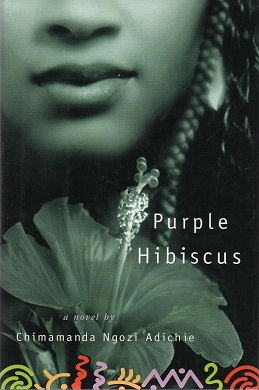
Image result for purple hibiscus novel


  1.  After finishing second in her class in the previous term, what position did Kambili come in this term?
  2. What is the name of the Kambili and her family’s hometown?
  3. What is Papa’s title in the family’s hometown, and what does it mean?
  4. ‘Papa liked it when the villagers made an effort to _____ ________ around him. He said it showed they had ______ _______.’
  5. Find a word that Papa apparently uses to describe the people currently running Nigeria.
  6. How long were Kambili and Jaja allowed to stay at their paternal grandfather’s (or Papa-Nnukwu’s) house? Why is this?
  7. Why was Papa so fond of Jaja and Kambili’s maternal grandfather (i.e. Beatrice’s father) before he died five years earlier?
  8. How would you describe Papa Nnukwu’s character? Produce a PEE response.
  9. Why was Papa angry with Jaja and Kambili on their return from Papa-Nnukwu’s house?
  10. What language did Papa speak when he was angry with his children? Why do you think this might be?

Thursday, 2 February 2017

Monologues Preparation


Whether you're delivering your monologues next week (Tuesday 7th February) or the following week (Tuesday 14th February), you should make sure you are preparing responses to each of the six topics now.

Remember, each of your two monologues should be about two minutes in length and should be structured in a similar fashion to a written essay, i.e:
  • Introduction: 10-15 seconds stating the importance / relevance of the topic.
  • Main: You should split the main body of your monologue into 2-4 sections, depending on the number of bullet-pointed ideas you will be referring to (so, between 30 and 40 seconds per idea).
  • Conclusion: 15-20 seconds coming to a conclusion about the topic under discussion.

Success Criteria:
  • You will be expected to refer to 1-2 external sources (e.g. internet articles) for each idea that you talk about. You can use Pocket to store relevant and interesting articles, before going back to them and extracting 1-2 of the most important pieces of information in them.
  • Your voice should be clear and fluent (indicating your degree of preparation).
  • You should aim to include a range of the structures below, including grammatical structures such as conditionals, reported speech structures and passive voice structures.